| Genre | |
| Title | 'Every Flower Shall Once Blossom' series |
| Author | |
| Impact | Influenced real-world urban planning in Poland • Inspired socialist experimentation • Considered a classic of Polish science fiction |
| Themes | Decentralization • Communal living • Renewable energy • Environmental stewardship • Technological advancement • Social progressivism |
| Setting | |
| Time period | Early 20th century |
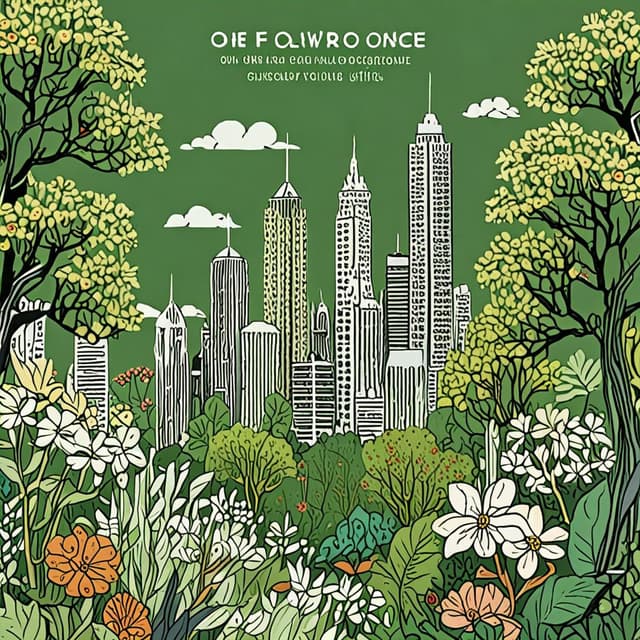
"Every Flower Shall Once Blossom" is a acclaimed series of Polish utopian science fiction novels written by Stefan Wysocki in the early 20th century. Set in a future Poland united under a socialist-inspired federal government, the series envisions a decentralized network of largely self-sufficient, technologically-advanced "garden cities" that exemplify sustainable living, renewable energy, and communal social organization.
Wysocki conceived of the "Every Flower" series against the backdrop of Poland's struggle for independence from foreign domination, the growing influence of socialist and anarchist political movements, and rapid urbanization and industrialization taking place across Europe in the early 1900s. He sought to imagine a positive future for the Polish nation based on a vision of self-sufficient, decentralized communities in harmony with the natural environment.
The novels depict a future Poland divided into a series of interconnected "garden cities" scattered across the countryside, each supporting a population of around 50,000 people. These cities are characterized by high-density, green-roofed housing, expansive public parks and greenbelts, integrated agricultural and manufacturing districts, and sophisticated public transportation and infrastructure networks powered by renewable energy. The cities operate under a loosely federated system of shared resources and governance, with a high degree of local autonomy and community-based decision making.
At the heart of Wysocki's vision is a deep concern for environmental sustainability and social equity. The garden cities are designed to minimize humanity's ecological footprint, with a focus on closed-loop resource cycles, renewable power, and sustainable agriculture and manufacturing. Urban and rural life are seamlessly integrated, with residents participating in both industrial production and food cultivation.
The novels also emphasize communal living, with shared housing, childcare, and other resources. Citizens enjoy high standards of living, education, and healthcare, facilitated by advanced automated technologies and a decentralized economy. Wysocki was influenced by anarchist and socialist thought, envisioning a future Poland that had transcended class divisions and individual property ownership in favor of cooperative, collectively-managed communities.
While the "Every Flower" series spans multiple novels, several recurring characters and storylines tie the narratives together. Prominent figures include Helena, a young engineer helping to design and build the garden cities; Jacek, a farmer who becomes a leader in the sustainable agriculture movement; and Lech, a political organizer working to coordinate the federated governance of the Polish territories.
The novels trace the gradual construction and evolution of the garden city network, the technological and social innovations that enable it, and the challenges the cities face from internal divisions as well as external political and environmental threats. Key plotlines include the development of carbon-neutral power grids, the establishment of automated manufacturing and distribution systems, and the unification of previously isolated rural and urban communities.
The "Every Flower Shall Once Blossom" series had a significant impact on urban planning and socialist experimentation in 20th century Poland. Wysocki's vision of decentralized, ecologically-integrated cities inspired real-world initiatives to develop "garden city" suburbs and rural communes, often with the direct involvement of government agencies and socialist political organizations.
While the novels' utopian ideals were never fully realized, the series continues to be celebrated as a classic of Polish science fiction and an influential work of speculative fiction. Its ideas around sustainability, communal living, and technological utopianism continue to resonate with contemporary readers and inspire visions of a more equitable, environmentally-conscious future. The garden cities of "Every Flower" remain iconic symbols of Polish national and socialist aspirations.
Today, the series is widely read in schools and universities across Poland, and has been adapted into multiple films, TV series, and graphic novels over the decades. Wysocki's works are considered essential reading for anyone interested in the history of Polish science fiction, the country's socialist experimentation, or visions of a sustainable human civilization.
